
Last night, I was watering the plants on our apartment porch when I stopped and realized how good everything looked.
Finding shade plants for containers can take some trial and error, especially when your porch receives little direct sunlight.
Our porch faces almost directly north in the Spokane area, with plenty of indirect light but usually only one or two hours of direct sun, even during summer.
Still, the hostas were full and flowering. The ajuga was spilling over the side of its pot in shades of green, cream, and purple. The catmint had finally filled out. Even the lilac I have hauled from home to home for nearly a decade looked healthy and green.
Then I realized the best part: I did not have to buy all new porch plants this spring.
If your porch, patio, or apartment balcony is mostly shaded, you can still grow containers that look full and colorful!
Choosing cold-hardy perennials also means you may not have to start over every year!
♡ PIN IT FOR LATER ♡
This post may contain affiliate links, which means I’ll receive a commission if you purchase through my links, at no extra cost to you. Please read our full disclosure here.
The plants in my containers go dormant during our cold Spokane winters and return when the weather warms.
Most were purchased from the end-of-season clearance section, when they looked much less impressive than they do now.
A few were downright scraggly.
They needed time, decent soil, reliable drainage, and a little patience.
Now they return fuller each spring and make the porch feel like a small garden rather than a temporary collection of annuals.
✨Did you know you can buy live plants on Amazon?!
Shop for hostas, ajuga, coral bells, astilbe, Japanese painted fern, brunnera, lungwort,
For porches with a little direct sun, you can also look at Catmint and compact lilacs
Before ordering, check the plant’s hardiness zone, mature size, and light requirements.
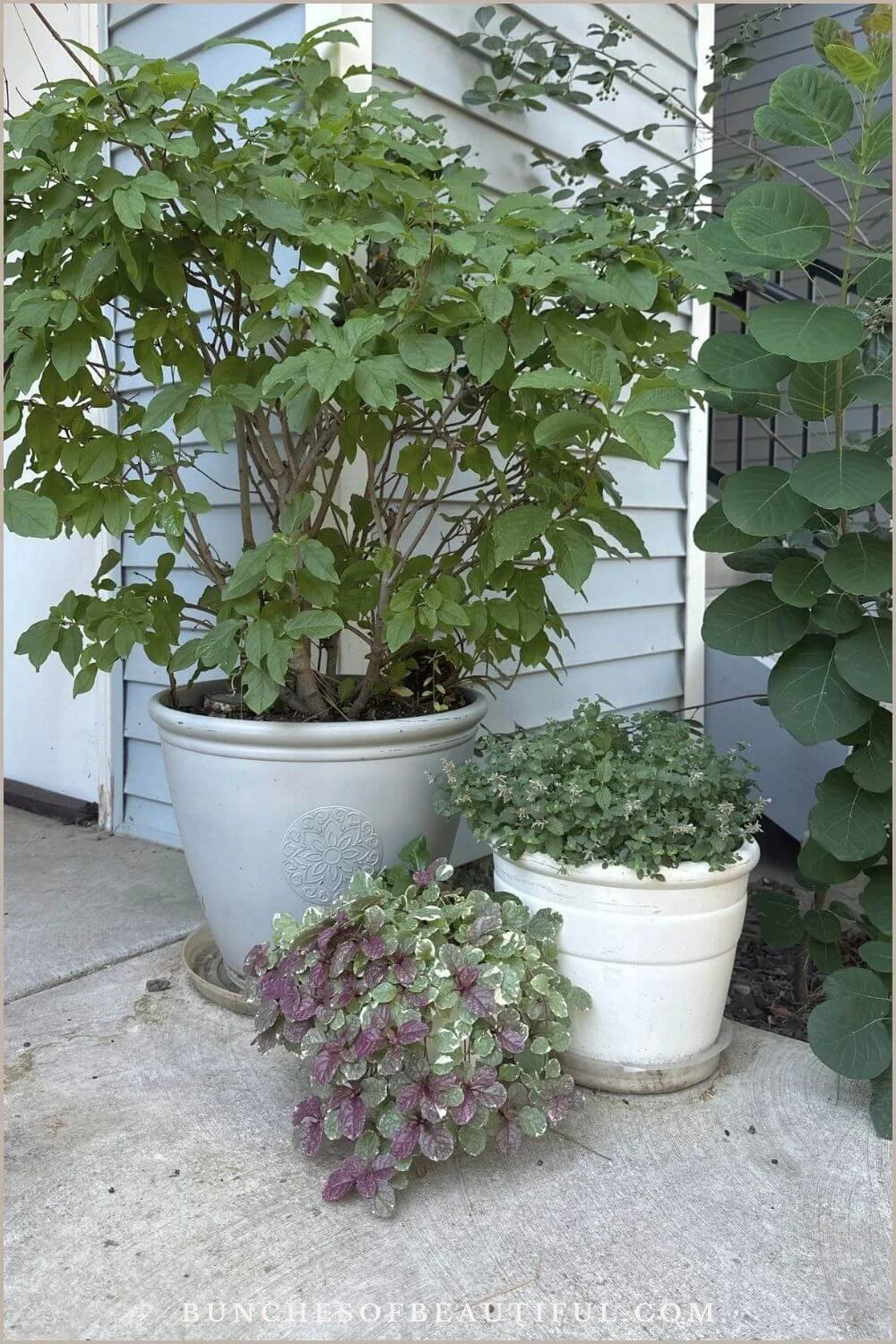
Several perennials growing on our mostly shaded, north-facing apartment porch.
Four Shade Plants I Have Successfully Grown in Pots
The first four plants on this list are growing on my own apartment porch.
They have remained outdoors through Spokane winters without being moved into a garage, wrapped in insulation, or given an elaborate seasonal spa treatment.
That is my experience in this location, not a guarantee for every plant or climate.
A perennial that survives winter in the ground can be more vulnerable in a pot because its roots are exposed to colder temperatures.
Local climate, wind exposure, container size, drainage, and the plant’s exact hardiness rating all matter.
Use my porch as encouragement, then use the plant tag and your local growing zone to make the final decision!
1. Hostas
Choose hostas when you want a shaded container to look full even when nothing is blooming. Their foliage provides most of the color and texture, and they can return for years when the variety, pot, and winter conditions are right.
If you are starting with hostas, my complete guide to growing hostas in pots covers container size, soil, watering, winter care, and what to expect as the plants mature.
Depending on the variety, hosta leaves may be deep green, blue-green, chartreuse, cream, or variegated.
The hostas in my container looked sparse during their first season. They returned larger after their first winter and became substantially fuller after the second. This year, they also sent pale lavender flowers above the leaves! Just beautiful!
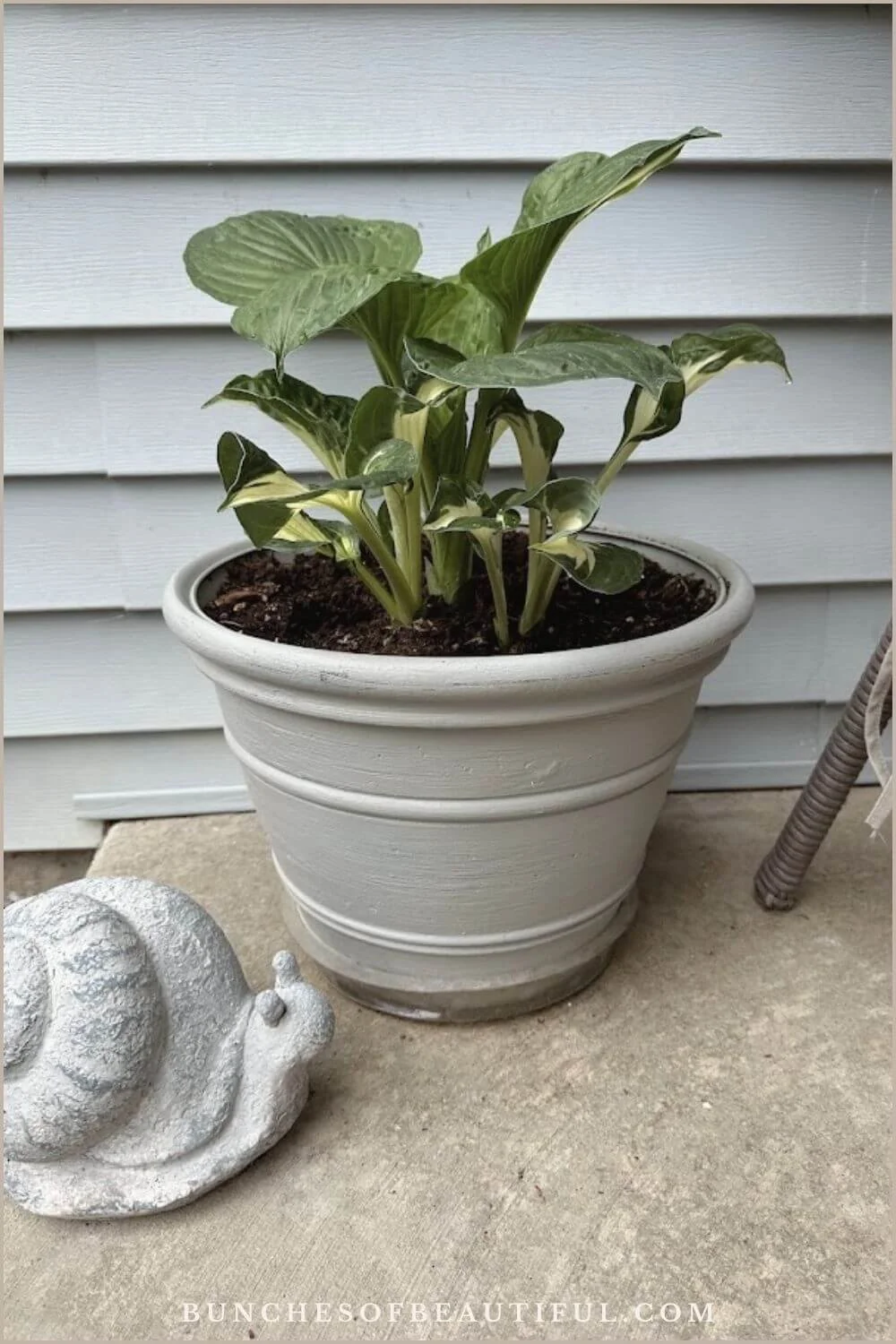
My hosta after its first winter in the pot. It was healthy but still fairly small.
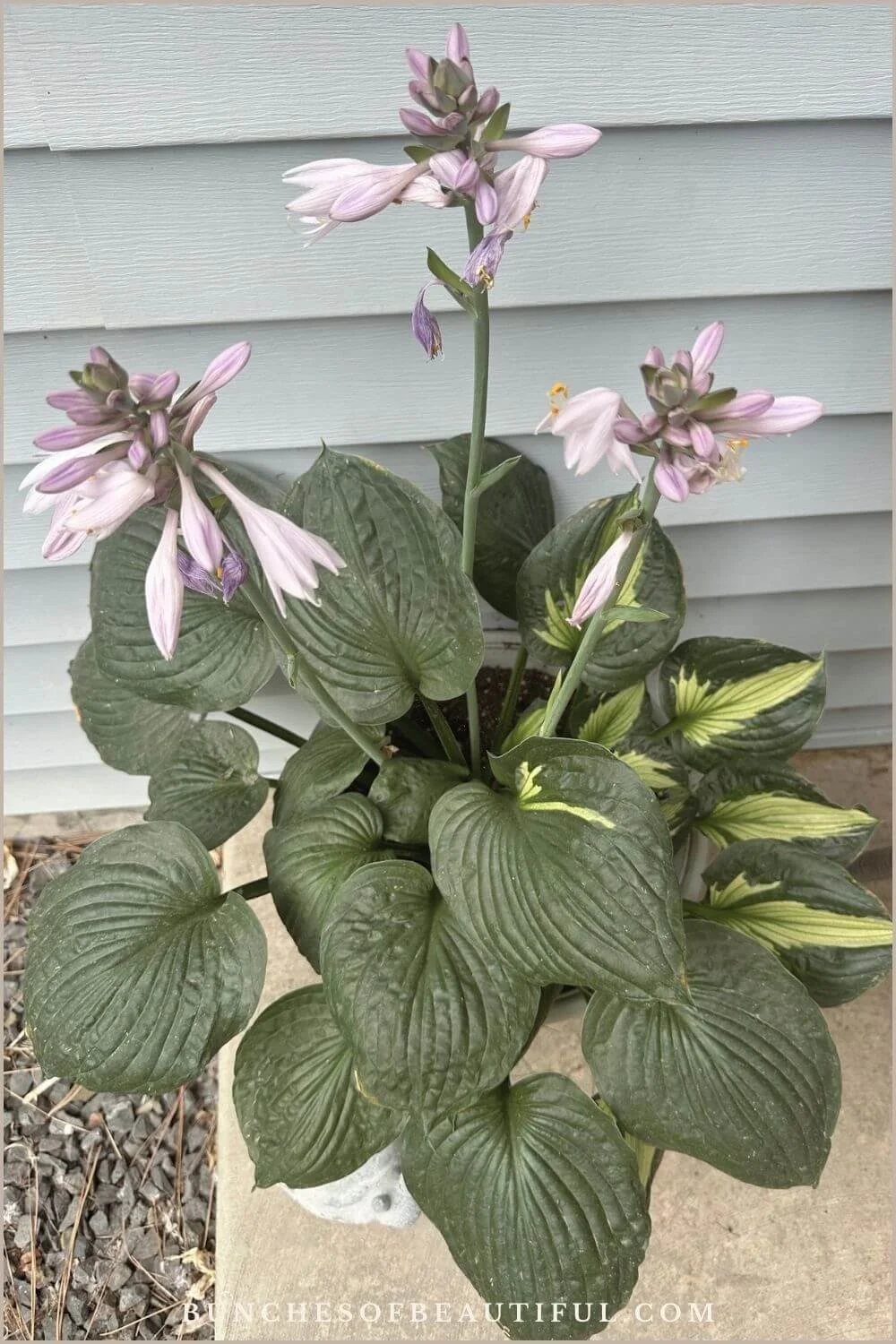
The same hosta after another winter. It returned much fuller and produced several flower stalks.
✨Best for: Mostly shaded porches, patios, and balconies with bright indirect light
✨What to expect: Full foliage during the growing season, summer flower stalks on many varieties, and complete dormancy after frost
✨Container note: Check the mature size before choosing a pot. Large hostas can outgrow small containers surprisingly quickly.
2. Ajuga or Bugleweed
Ajuga is the low, trailing plant spilling over the front of one of my containers.
The variety I grow has small leaves marked with green, cream, and purple, so it adds color even when it is not flowering.
It did not look especially good during its first season.
It was one of those clearance plants that made the pot look a little sad before it made it look better. After overwintering, it returned thicker and began trailing naturally over the edge.
Ajuga is commonly grown as a ground cover because it spreads readily. That same habit makes it useful in a container, where it can soften the rim of the pot or fill the lower level beneath a taller plant.
Keeping it contained also prevents it from wandering through a garden bed with more enthusiasm than invited.
✨Best for: The front or edge of a shaded container
✨What to expect: Low-growing foliage, a spreading habit, and small flower spikes depending on the variety
✨Container note: Let it trail over the edge, but trim it back if it begins crowding its container companions.
3. Catmint
Catmint is usually associated with sunny garden beds, so I did not expect mine to be particularly happy on a north-facing porch.
It has surprised me!
My catmint receives very little direct sun, yet it has returned after winter and filled its pot with soft, gray-green foliage and small purple flowers.
Like the ajuga, it looked rough during its first season and became much more attractive after it had time to establish.
Catmint generally grows more densely and flowers more heavily with additional sun. In deeper shade, it may have a looser shape and fewer blooms.
I would not choose it for a completely dark corner. However, a porch that receives bright indirect light and a little morning or late-afternoon sun may be worth trying!
✨Best for: Partial shade or bright shade with a small amount of direct sun
✨What to expect: Aromatic foliage, soft purple flowers, and potentially fewer blooms than a plant grown in full sun
4. Compact Lilac
The oldest plant in my container collection is a lilac that has moved with us for approximately eight or nine years!
It has lived on porches and patios with full sun as well as our current mostly shaded porch. It has been loaded into moving trucks, shifted between containers, and dragged into more family decisions than any shrub reasonably expects lol
Lilacs usually produce the most flowers in full sun. I would not purchase one for a shady porch and expect a huge spring flower show.
Still, mine has remained healthy and continues to produce clusters of pale purple flowers with very limited direct light.
What has surprised me most is how good the foliage looks! On hotter patios with full sun, the plant sometimes became stressed and tired-looking. In this protected, north-facing location, the leaves stay green and the shrub looks full from early spring until late fall!
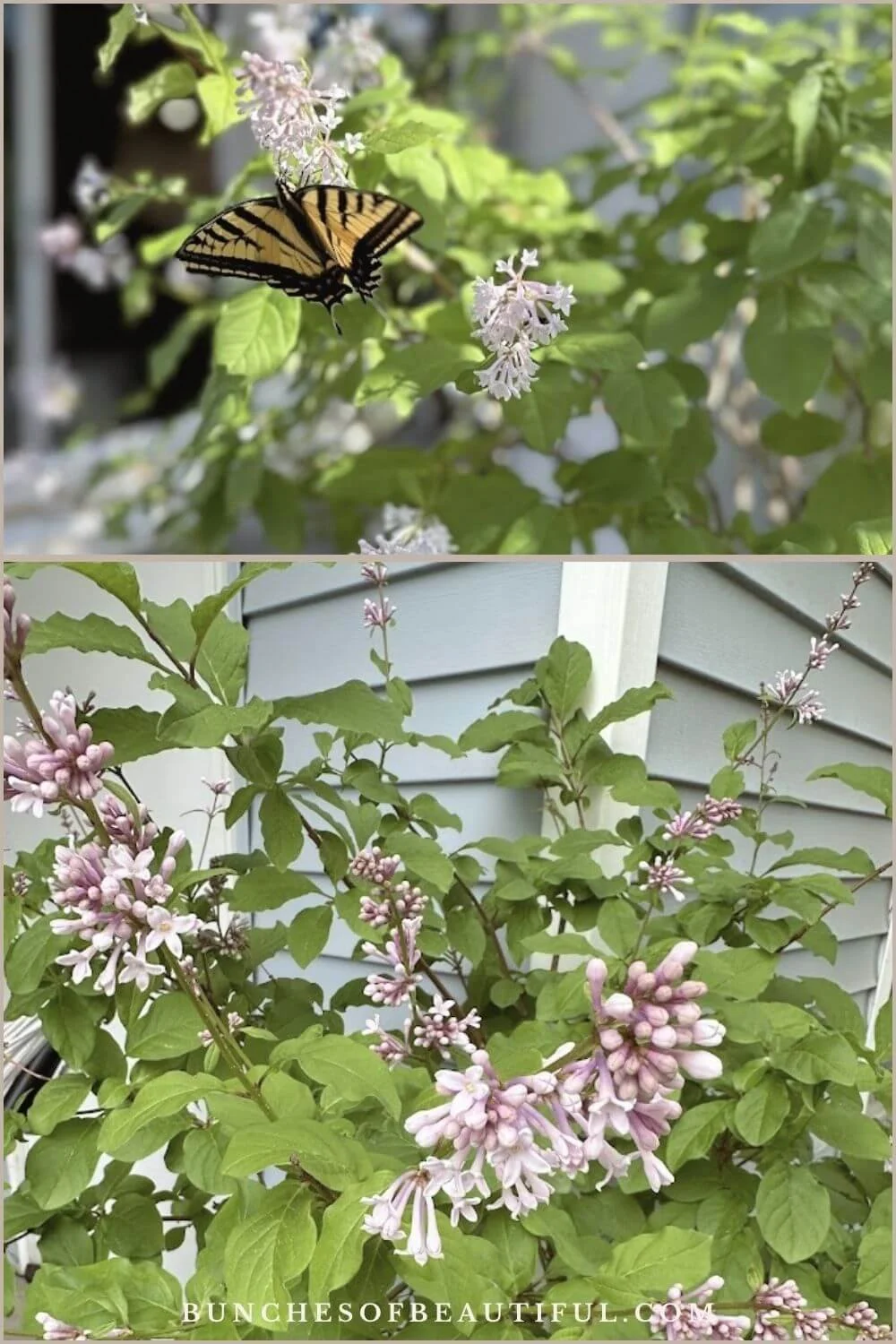
The lilac has lived in this container for almost a decade and still produces pale purple flower clusters.
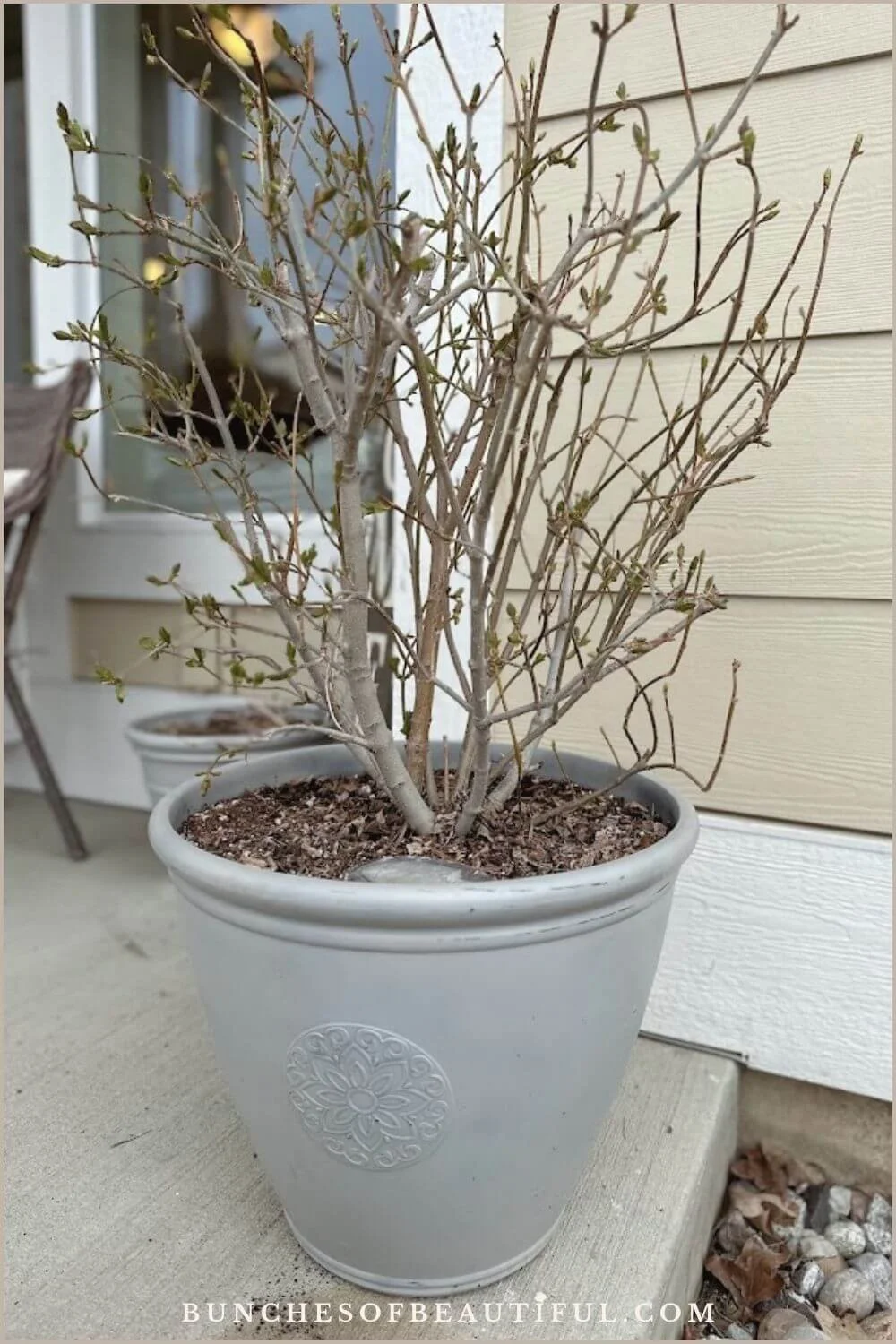
The potted lilac stays outdoors all winter and begins leafing out again in spring.
✨Best for: A large container in partial shade or on a porch that receives some direct sun
✨What to expect: A woody framework through winter, fresh leaves in spring, and fewer flowers in shade than in full sun
Five More Perennials to Consider for Shade Containers
I have not personally grown the next five plants in my porch pots, so I do not want to present them as part of my own trial.
In saying that though they are established shade perennials with varieties hardy enough for many colder climates. They are also the plants I’m going to peek into next as I add to my collection.
Always check the hardiness information for the exact variety you are buying! Plants within the same general group can have different tolerances, mature sizes, and moisture needs.
5. Coral Bells
Coral bells are grown primarily for their colorful foliage. Depending on the cultivar, the leaves may be lime green, caramel, silver, burgundy, purple, or nearly black.
They are useful when a shaded pot needs color but you do not want to depend on flowers behaving themselves all season.
Their tidy, mounding form fits containers naturally.
Slender stems carrying small, bell-shaped flowers rise above the foliage during the growing season, but the leaves are usually the main event.
Coral bells need good drainage, particularly during winter. Some varieties tolerate cold better than others, so the plant tag matters here.
✨Container note: Keep the crown from sitting in wet soil, and consider extra winter protection if the variety is only marginally hardy in your area.
6. Astilbe
Astilbe produces fernlike foliage and soft flower plumes in white, pink, red, or purple.
It grows well in partial shade and can tolerate heavier shade, but it does not enjoy drying out.
In a larger container with evenly moist soil, however, astilbe can add height, softness, and flowers without needing strong direct sun.
Watch the soil closely during warm or windy weather. Brown leaf edges can be a sign that the plant has become too dry.
✨Best for: Shaded containers that can be kept consistently moist
7. Japanese Painted Fern
Japanese painted fern is a good choice when a shaded porch needs texture rather than another flowering plant.
Its fronds often combine silvery gray, green, and burgundy tones. Those pale colors can brighten a darker corner without making the container feel overly busy.
Ferns pair especially well with hostas because the finely divided fronds contrast with broad, solid hosta leaves.
One looks delicate, the other looks sturdy, and together they make the pot seem much more planned than it may actually have been.
Japanese painted fern is deciduous. Its foliage disappears during winter, and new fronds emerge from the crown in spring.
✨Best for: Cool, shaded containers with consistent moisture
✨What to expect: Delicate-looking fronds with silver, green, and burgundy coloring
✨Container note: Protect it from drying wind and avoid letting the soil become completely dry.
8. Brunnera
Brunnera, sometimes called Siberian bugloss, has heart-shaped leaves and small blue spring flowers that resemble forget-me-nots.
Silver-leaf cultivars such as ‘Jack Frost’ are especially useful in shade because the pale foliage reflects light and remains attractive after the spring flowers fade.
That matters a lot! A brief bloom is lovely, but foliage that carries the pot through the rest of the growing season earns its keep!
Brunnera prefers rich soil, regular moisture, and protection from hot afternoon sun.
9. Lungwort
Lungwort has an unfortunate name for such a genuinely pretty plant lol
Many varieties have green leaves spotted, streaked, or washed with silver. Early flowers may open pink and mature to blue or purple, sometimes showing several colors on the same plant.
Its low, mounding habit works well near the front of a container. It can provide spring flowers and patterned foliage without becoming especially tall.
✨Fun Fact: Medieval herbalists thought Lungwort’s spotted leaves resembled diseased lungs and believed that meant the plant could treat respiratory problems!
Don’t Judge a Perennial in Its First Year
Perennials do not always look their best during the first season.
A newly planted perennial is busy recovering from transplanting and developing roots. And if you buy one late in the year, it may also be getting ready for dormancy instead of putting out new leaves or flowers.
That can make a new container look sparse at first, especially if the plant came from the clearance section.
Do not panic!
Many perennials need more than one growing season to reach their full beauty and glory. And some can take two or three years to really fill out, depending on the plant, the growing conditions, and the size of the container.
My hostas, ajuga, and catmint all looked fairly unimpressive during their first year.
After their first winter, they returned fuller and better proportioned to their pots. By the following season, they looked much closer to the mature plants I had hoped for.
The first year may not give you an instantly full container, but a healthy perennial is totally worth the wait!
How to Help Perennials Survive Winter in Pots
Potted perennials can survive cold winters, but their roots are more exposed than the roots of plants growing in the ground.
The plants on our porch stay outside all winter. I do not move them into a garage or wrap the pots, and I usually leave the dead foliage in place until spring.
That simple routine has worked in this particular protected location, but an exposed balcony, smaller container, colder climate, or less-hardy plant may require additional protection.
For the best chance of winter survival:
Choose plants rated for colder temperatures than your local growing zone when possible.
Check the hardiness rating for the exact cultivar rather than relying only on the general plant name.
Use containers with open drainage holes.
Choose larger pots when possible because a greater volume of soil changes temperature more slowly.
Continue watering when needed during autumn, especially during dry weather.
Remove diseased foliage, but consider leaving healthy dead stems and leaves in place until spring.
Give dormant plants enough time to reappear before deciding they did not survive.
Remember that some ceramic and terra-cotta containers can crack during repeated freezing and thawing.
A commonly used rule of thumb is to choose plants rated approximately two growing zones colder than your own when they will remain outdoors in pots. Treat that as a starting point rather than a guarantee.
If your balcony is exposed to strong wind or the plant is only marginally hardy, move the container into an unheated garage or add insulation around the pot.
How to Spend Less on Porch Plants
Perennials can reduce the cost of replanting containers every year. A few smart shopping and planting choices can stretch the budget even further.
Shop at the End of the Season
Garden centers often mark down perennials after they finish blooming or when seasonal inventory needs to be cleared.
A few brown leaves or spent flowers are usually not a problem. Focus on the health of the plant instead.
Look for:
Firm stems
Healthy roots
New growth near the crown
Soil that is still slightly moist
Avoid:
Widespread disease
Mushy stems
Severe rot
A root ball that is completely dried out
A plant can look tired and still be a good buy. The goal is healthy roots, not perfect foliage.
Divide Crowded Plants
Many established perennials, including hostas, can be divided once they become large enough!
One mature plant may eventually provide:
A second container
A plant for another shaded spot
A free plant to share with a friend
Dividing healthy plants is one of the easiest ways to expand a porch garden without buying something new.
Frequently Asked Questions
Can Perennials Survive Winter in Pots?
Yes, many cold-hardy perennials can survive winter in containers. Their roots are less insulated than roots growing in the ground, so choose varieties that are hardier than your local zone when possible. Larger pots and reliable drainage improve the odds.
What Can I Grow on a Porch With Almost No Direct Sun?
Hostas, ajuga, Japanese painted fern, brunnera, lungwort, and some coral bells are worth investigating for bright shade. Astilbe may also grow well if you can keep the soil consistently moist.
Check the requirements of the exact variety, since some tolerate deeper shade better than others.
Will Catmint Grow in Shade?
Catmint generally grows and flowers best with more sun, but some plants tolerate partial shade. Mine grows on a north-facing porch with only a small amount of direct light.
Expect fewer flowers and a looser shape in shade than you would see in full sun.
Will a Lilac Bloom in Shade?
Lilacs bloom most heavily in full sun. My established potted lilac still produces some flowers on our mostly shaded porch, but that is a personal result rather than what every gardener should expect.
If abundant flowers are the priority, give a lilac more direct sun.
Should I Cut Potted Perennials Back Before Winter?
Not necessarily. I leave most dead growth in place and clean the pots in spring. Old stems and foliage may help protect the plant crowns and provide winter habitat.
Diseased foliage should be removed rather than left beside the plant.
Living in an apartment does not mean every porch plant has to be temporary!
The perennials on our north-facing porch have survived snow, freezing temperatures, summer heat, and several moves.
Some looked disappointing during their first season. Given time, they became healthier, fuller, and far more economical than replacing an entire collection of annuals every spring.
If you are looking for shade plants for containers, start with one or two perennials suited to your light and climate. Give them good drainage and enough time to establish and you can enjoy them for years to come! hugs!

For more on shade plants for containers follow me on Pinterest!
Updated on: 7/23/2026


Use the FlyLady Method to declutter your home without the all-or-nothing burnout. I’ll show you how I use Zone Work to declutter in small, manageable chunks, whether that means 15 minutes a day or one focused hour each week.